When buying or renting property in Curaçao, you will encounter different currencies. This article explains the introduction of the Caribbean guilder (XCG), its relationship with the U.S. dollar, and how these currencies affect real estate pricing on the island. For the live numbers, see Homes for sale in Curaçao under US$500,000.
What is the Caribbean guilder
The Caribbean guilder (XCG) was introduced as legal tender on 31 March 2025. It replaced the Netherlands Antillean guilder (ANG) as part of a monetary union between Curaçao and Sint Maarten, which have been autonomous countries within the Kingdom of the Netherlands since 10 October 2010.
The transition from the old currency followed a specific schedule:
- As of 31 March 2025, the XCG became legal tender.
- From 30 June 2025, the ANG is no longer accepted for cash payments.
- Commercial banks allowed the exchange of ANG banknotes and coins for one year following the introduction of the XCG.
- The Central Bank of Curaçao and Sint Maarten (CBCS) allows the exchange of ANG banknotes and coins for up to thirty years after the introduction.
The design of the XCG banknotes is based on a “World Under the Sea” theme, featuring marine life on the front and historical or cultural landmarks on the reverse. The coins feature maritime themes such as turtles, seashells, and waves.
Exchange rate and property prices
The Caribbean guilder is legally pegged to the U.S. dollar at a fixed exchange rate of US$1 = 1.79.
Get new homes for sale on Curaçao by email
Free. One email a week with the new homes that match.
Because of this peg, many brokers list properties in US$. On the RealEstatesCuraçao portal, prices are shown in USD, even if the broker published them in another currency. This allows buyers to compare properties easily.
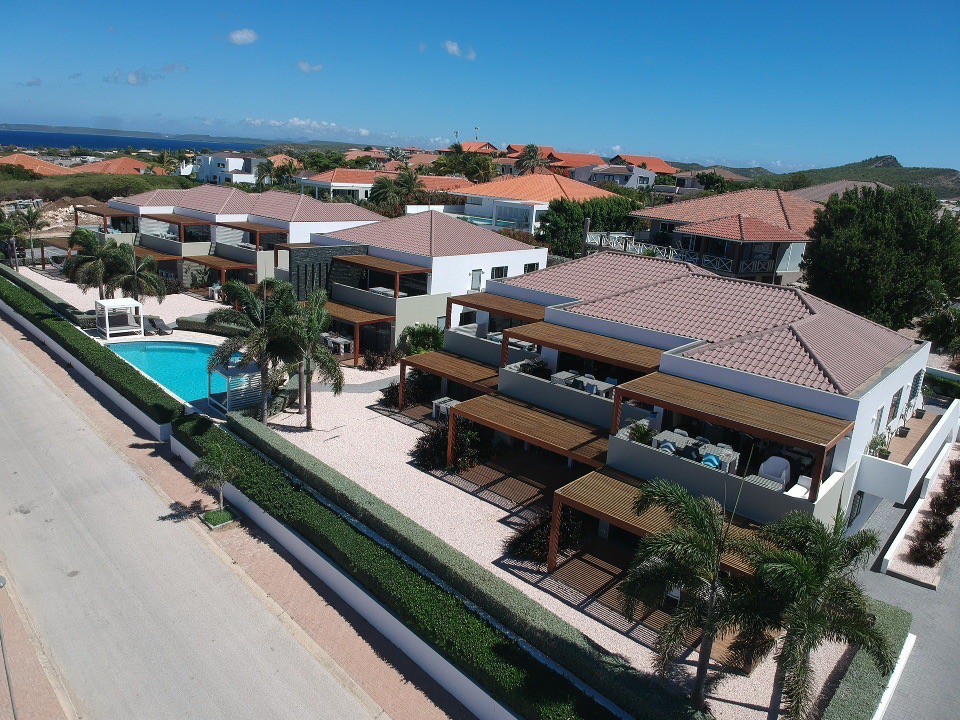
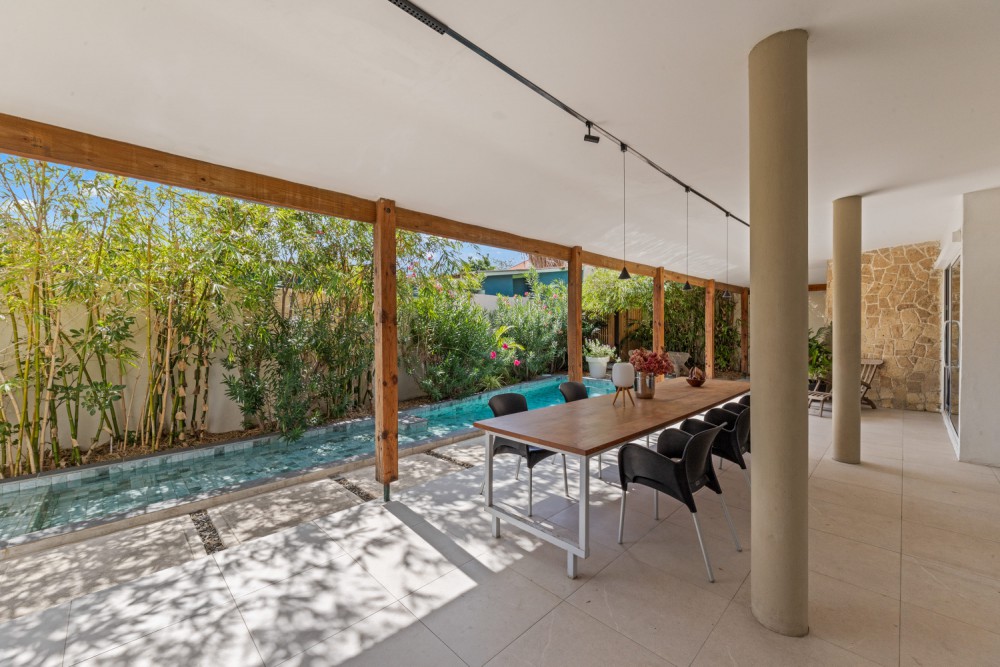
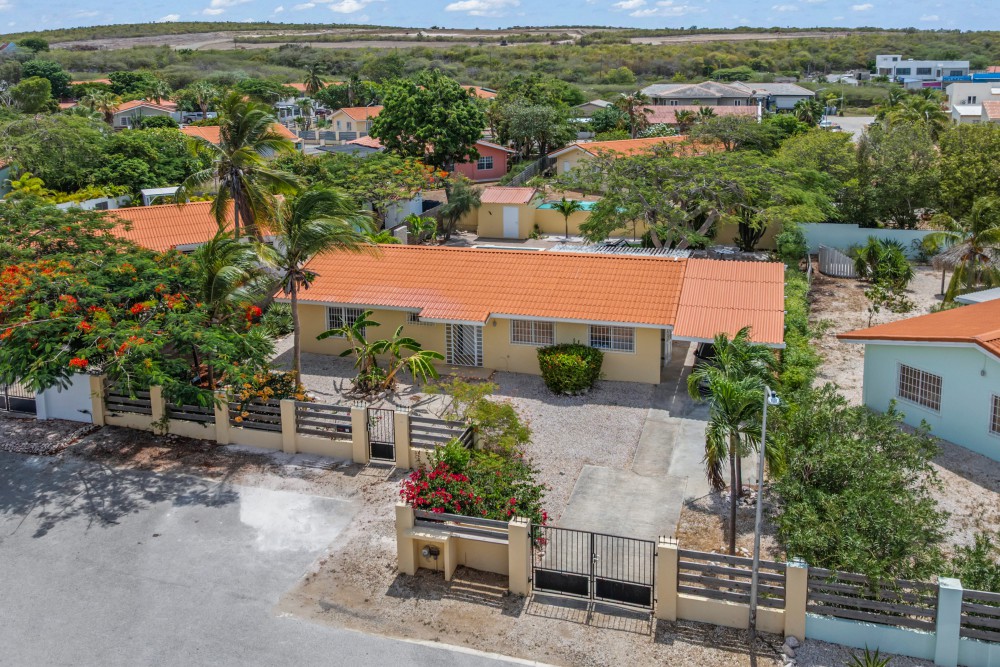
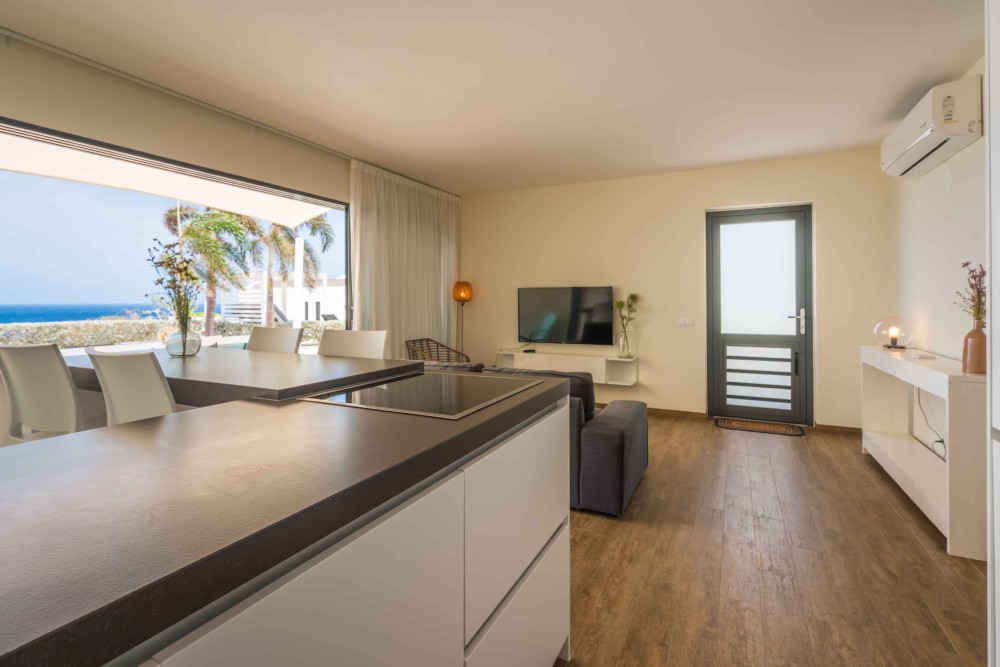
As of 30 October 2026, there were 1,057 properties for sale on the portal. Of these, 917 had a published asking price. The median of these asking prices was US$685,000, and half of the asking prices lay between US$406,000 and US$1,095,000.




For those looking to rent, the portal listed 352 properties as of 30 October 2026. Among these, 272 rentals had a published monthly rent. The median monthly rent was US$1,860, with half of the rents lying between US$1,340 and US$2,520.
Property taxes and fees
Buyers in Curaçao must account for specific government taxes when purchasing property. These are typically calculated based on the value of the asset.
The transfer tax (overdrachtsbelasting) is a one-time tax paid upon the transfer of real estate. This tax is 4% of the value of the property. The value used for this calculation is generally the purchase price stated in the deed; however, if the purchase price is lower than the value recorded in the land registry (kadaster), the higher value is used as the basis for the tax.
Owners are also subject to an annual property tax (onroerendezaakbelasting, OZB). This tax replaced the previous land tax on 1 January 2014. The OZB is based on the value of the property in economic circulation. If a building is located on leasehold (erfpacht) land owned by the government of Curaçao, the person leasing the land is responsible for paying the OZB on the value of the building.
For more details on these costs, you can read our guides on property transfer tax in Curaçao and the annual property tax (OZB).
The role of the notary
A notary is essential for any real estate transaction in Curaçao. They handle the legal transfer of ownership and ensure that all government requirements are met.
The notary is responsible for:
- Drafting the purchase agreement and the final deed of transfer.
- Calculating and collecting the transfer tax for payment to the government.
- Ensuring that any mortgage (hypotheek) is correctly registered.
- Verifying the legal status of the property through the land registry (kadaster).
Because the notary acts as a neutral legal officer, they ensure that both the buyer and seller fulfill their contractual obligations before the property is officially transferred.
Further information on the specific steps and legal requirements can be found in our guide to the notary in a Curaçao property purchase.












Newest homes on Curaçao
Search all homes